


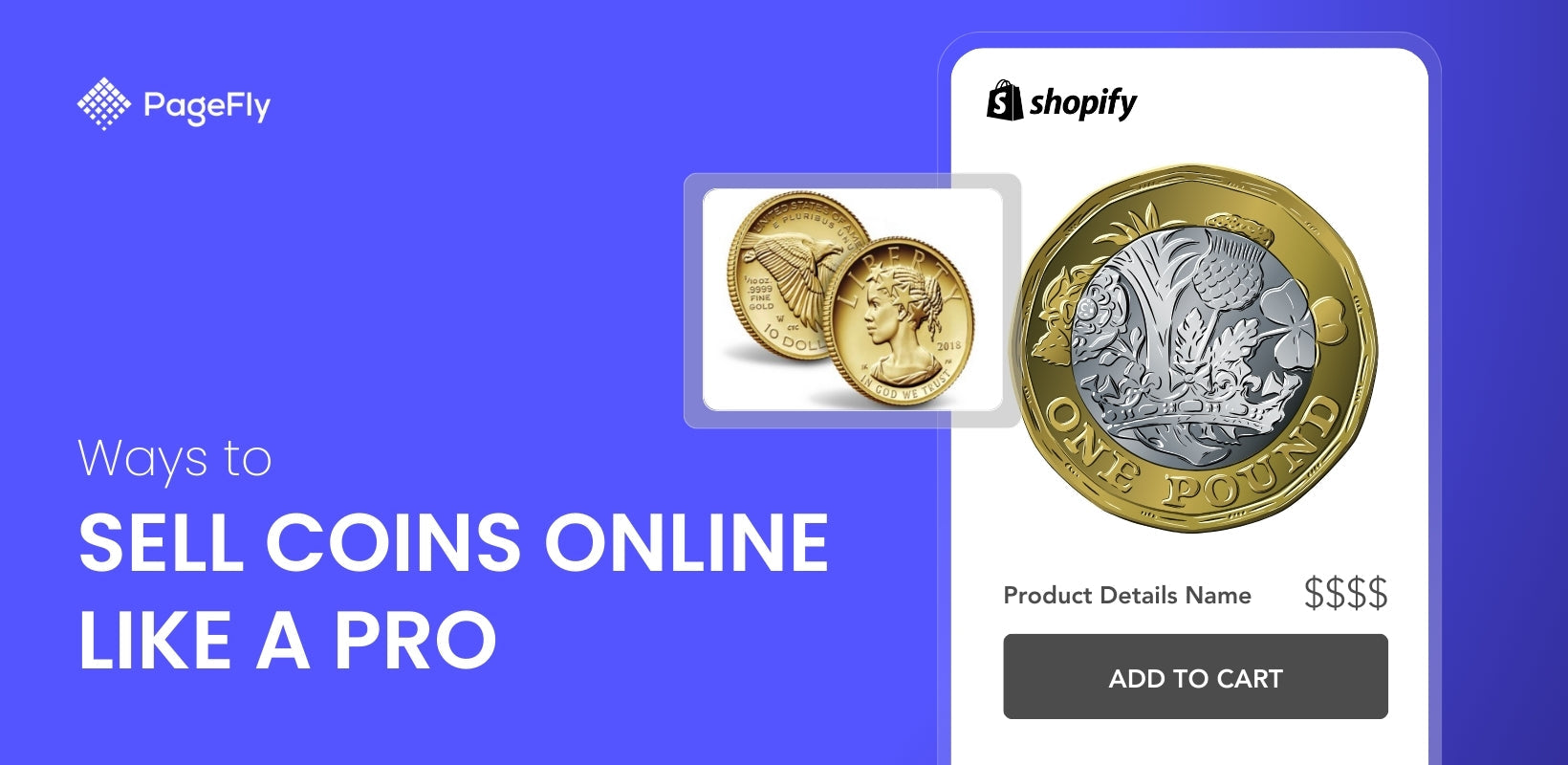
The global coin collecting market is valued at over $10 billion in 2026, with online sales now accounting for the majority of transactions. Whether you have rare coins, gold bullion, error coins, or commemorative sets, selling coins online gives you access to millions of collectors worldwide — and the right platform can mean the difference between a quick sale at fair value and leaving money on the table.
This guide covers the 7 best places to sell coins online in 2026, how to get your coins appraised, what types of coins are in highest demand, and step-by-step selling strategies for each platform.
- The coin collection market was valued at $8.8 billion in 2022 and is projected to reach $17.3 billion by 2029 — a CAGR of over 10%
- Professionally graded coins sell for 20–300% more than ungraded equivalents
- Over 60% of coin collectors now purchase online, up from 40% in 2020
Why Should You Sell Coins Online?

Source: Canva
Selling coins online has become the most profitable channel for numismatists and casual sellers alike. The shift from physical coin shops to online marketplaces means lower costs, wider reach, and better prices for sellers.
Here are the key advantages of selling coins online:
Wider Audience
When you sell coins in a physical store, your customers are limited by geographical location. Selling coins online gives you access to collectors worldwide — a single rare coin listing can attract bidders from dozens of countries, dramatically increasing your final sale price.
Convenience
Online coin selling operates 24/7. List your coins once and let the platform handle visibility, inquiries, and payments. No store hours, no foot traffic dependency — just automated sales that work while you sleep.
Competitive Pricing
Online marketplaces create transparent pricing dynamics. Sellers can compare prices across platforms like eBay, Heritage Auctions, and APMEX in real time, ensuring they price competitively while maximizing profit margins.
Reduced Overhead
Compared to brick-and-mortar coin shops, selling online eliminates rent, utilities, and staffing costs. Your primary expenses are platform fees (typically 5–15%) and shipping — a fraction of physical retail overhead.
What Coins Are in Demand in 2026?
Understanding which coins sell best online helps you prioritize your inventory and pricing strategy. Here are the most in-demand categories:
Rare and Historic Coins

Source: Gerrads Bullion
Coins with limited mintage, historical significance, or unique features are the highest-value items for collectors. Ancient coins (380–325 B.C.) routinely sell for $800+ on specialized platforms, while coins from the 1700s start at $200 and up. The rarer the coin, the more collectors are willing to pay — some individual pieces have sold for over $1 million at auction.
Bullion Coins

Source: usmint.gov
Gold and silver bullion coins remain popular among investors seeking tangible assets for wealth preservation. With gold prices exceeding $2,900/oz in early 2026, demand for American Gold Eagles, Canadian Maple Leafs, and South African Krugerrands is at historic highs. Silver bullion coins like American Silver Eagles are equally popular at lower price points, making them accessible to a broader buyer base.
Error Coins

Source: The Spruce Crafts
Coins with minting errors — off-center strikes, double dies, wrong planchets — are prized by collectors for their rarity. Error coins can sell for thousands of dollars, with some rare specimens fetching $25,000+ per coin. The key is proper identification and grading, as unverified error coins sell for significantly less.
Commemorative Coins

Source: Modern Coin Mart
Special edition coins commemorating historical events, anniversaries, or influential figures attract both collectors and gift buyers. The U.S. Mint and Royal Mint regularly release new commemorative series, with prices ranging from $5 to several hundred dollars depending on mintage and metal content.
Read more: Sell Collectible Items On Shopify In 7 Easy Steps
Limited Edition Sets

Source: usmint.gov
Proof sets, mint sets, and anniversary sets with limited production runs are highly collectible. These sets often include certificates of authenticity and special packaging, adding to their resale value. Complete sets in original packaging consistently command premium prices on every major platform.
How to Get Your Coins Appraised

Source: PCGS
Getting your coins professionally appraised before selling is one of the most important steps to maximizing your sale price. Graded coins consistently sell for 20–300% more than their ungraded equivalents.
Professional grading services:
- PCGS (Professional Coin Grading Service) — The industry standard. Grading starts at $22/coin for economy tier (45+ business day turnaround). Express services available for $75–$300+/coin.
- NGC (Numismatic Guaranty Company) — Equally respected. Economy grading starts at $20/coin. Both PCGS and NGC use the Sheldon 1–70 grading scale.
- ANACS and ICG — Budget-friendly alternatives starting at $12–$15/coin, though they carry less market premium than PCGS/NGC.
DIY research options: If you want a preliminary estimate before paying for professional grading, use free resources like the PCGS CoinFacts app, NGC Coin Explorer, or the Red Book (A Guide Book of United States Coins) to research your coin's approximate value based on date, mint mark, and condition.
Pro tip: Only pay for professional grading on coins likely worth $100+ in graded condition. For lower-value coins, the grading fee may exceed the value increase.
How to Sell Old Coins Online
Selling coins online profitably requires the right platform, great photos, accurate descriptions, and competitive pricing. Here is a step-by-step approach:
- Choose the right platform: Match your coin type to the best platform. Rare coins do best on eBay or Heritage Auctions; bullion coins sell well on APMEX; vintage coins thrive on Etsy; and if you want full brand control, Shopify lets you build your own coin store.
- Take high-quality photos: Photograph both sides (obverse and reverse) against a plain background with even lighting. Show details at multiple angles. Avoid filters or color correction — collectors want to see the coin's true condition.

Source: Coinappraiser
- Write detailed descriptions: Include mint year, denomination, composition, mint mark, grade (if applicable), weight, and any notable characteristics. The more detail you provide, the more confidence buyers have — and confident buyers convert at higher rates.

Source: usmint.gov
The catalog of usmint.gov is a great example: accurate descriptions, complete specifications, and high-quality images that build buyer trust.
- Set competitive prices: Research recent sold listings on eBay (filter by "Sold" items), check PCGS and NGC price guides, and review current dealer buy prices. Price 5–10% below retail for quick sales, or at market value if you can wait for the right buyer.
- Ship safely and securely: Use padded mailers or small boxes with coin flips/holders. For high-value coins ($300+), use USPS Registered Mail with insurance. Always include tracking and require signature confirmation for orders over $500.
Quick read: How To Sell Chocolate Online With These 6 Marketing Ideas
7 Best Places to Sell Coins Online in 2026
Each platform serves different types of coins and sellers. Here are the seven best options, with step-by-step instructions, pros, cons, and real examples for each:
1. Shopify

With over 5.6 million live stores worldwide, Shopify is the leading e-commerce platform for building your own branded coin store. Unlike marketplaces, Shopify gives you full control over branding, pricing, and customer relationships — which means higher margins and repeat buyers.
How to sell coins on Shopify:
- Sign up for a Shopify plan (Basic starts at $39/month) and set up your store
- Customize your design with Shopify Themes and page builders like PageFly, an AI-powered CRO platform for Shopify, to create high-converting product pages for your coin listings
- Add product listings with high-quality photos, grading details, and certificate information
- Set up Shopify Payments (2.9% + 30¢ per transaction) and shipping options with insurance
- Use Shopify's built-in SEO tools and email marketing to attract collectors organically
Pros:
- Full brand control — build a recognizable coin dealer brand
- No marketplace fees — only payment processing costs
- Access to 8,000+ apps for inventory management, authentication display, and marketing
- Build an email list and drive repeat purchases from collectors
Cons:
- Monthly subscription required ($39–$399/month depending on plan)
- You need to drive your own traffic (no built-in marketplace audience)

Real example: Banknote Coin Stamp is a Shopify store selling rare and vintage coins and banknotes from over 100 countries across all six continents — from pre-war British-India banknotes to vintage US post stamps. It proves that a well-built Shopify store can compete with major marketplace sellers.
2. eBay

eBay is the single largest marketplace for buying and selling coins, with millions of active coin listings at any given time. The auction format is particularly effective for rare coins, where competitive bidding often drives prices above initial estimates.
How to sell coins on eBay:
- Create a seller account and review eBay's coin-specific selling policies
- List coins as auction-style (best for rare/valuable coins) or fixed-price (best for bullion/common coins)
- Include detailed descriptions, clear photos of both sides, and grading certification if available
- Set appropriate starting bids and shipping costs (offer free shipping on high-value items to boost visibility)
Pros:
- Largest built-in audience of coin collectors and investors
- Auction format drives competitive pricing on rare coins
- eBay's authentication service for coins $150+ provides buyer confidence
- Promoted Listings help increase visibility
Cons:
- Final value fees of 13.25% + $0.30 per order (as of 2026)
- Risk of buyer fraud, returns abuse, and non-payment
- High competition requires excellent listings to stand out
3. Amazon

Amazon provides access to over 2 billion monthly visitors, making it the largest B2C marketplace globally. While not specialized for coins, Amazon works well for bullion products, coin collecting supplies, and lower-priced collectible coins.
How to sell coins on Amazon:
- Create a Professional seller account ($39.99/month) — required for collectibles
- List coins with accurate descriptions, competitive pricing, and professional photos
- Consider Fulfillment by Amazon (FBA) for hands-off shipping and Prime badge eligibility
- Use Amazon PPC advertising to boost visibility in search results
Pros:
- Massive customer base with high purchase intent
- FBA handles storage, packing, and shipping
- Prime eligibility increases conversion rates significantly
Cons:
- Referral fees of 15% on collectible coins, plus FBA fees
- Strict product listing guidelines and category restrictions for coins
- Less specialized audience — serious collectors typically shop on dedicated platforms
4. Etsy

Etsy specializes in vintage and unique goods, making it an excellent platform for antique coins, vintage sets, and artisanal coin jewelry. Etsy buyers are typically willing to pay premium prices for unique, well-presented items.
How to sell coins on Etsy:
- Create a seller account and set up your shop with branding and policies
- List coins with detailed descriptions, high-quality photos, and relevant tags (vintage, collectible, numismatic)
- Price competitively — Etsy buyers expect fair pricing but will pay more for presentation and story
- Engage with customers and build reviews — Etsy's algorithm favors high-rated shops
Pros:
- Built-in audience that values vintage and unique collectibles
- Lower fees than Amazon (6.5% transaction fee + $0.20 listing fee)
- Strong community and seller support resources
Cons:
- Smaller audience than eBay or Amazon for serious numismatics
- Competition from other vintage sellers
- Etsy's offsite advertising fee (15%) on sales driven by Etsy ads for shops earning $10K+/year
5. APMEX

APMEX (American Precious Metals Exchange) is one of the largest online precious metals dealers, specializing in gold, silver, platinum, and palladium coins. If you're selling bullion or precious metal coins, APMEX offers a straightforward "Sell to Us" program with competitive pricing.
How to sell coins on APMEX:
- Go to APMEX.com and click "Sell to Us"
- Request a quote online or call (800) 514-6318
- Review the offer — APMEX bases prices on current spot prices plus premiums
- Ship your coins using their prepaid, insured shipping label
- Receive payment within 1–3 business days of verification
Pros:
- Established, reputable dealer with decades of trust
- Expert authentication and verification included
- Fast payment and transparent pricing based on spot metal prices
- Free insured shipping on approved orders
Cons:
- Prices are wholesale (buy prices), not retail — expect 5–15% below market value
- Best suited for bullion and precious metal coins, not rare numismatic pieces
6. Cash for Coins

Cash for Coins provides instant offers for coins, gold, and bullion based on current market values. It's the fastest way to sell coins online if you prioritize speed and convenience over maximizing price.
How to sell on Cash for Coins:
- Visit the Cash for Coins website and select your coin type
- Enter the quantity and condition of each coin
- Provide your email and zip code
- Review the instant cash offer
- Accept and ship using their insured shipping label, or browse their dealer directory for local buyers
Pros:
- Instant offers — no waiting for auctions or buyers
- No listing fees or seller commissions
- Secure, insured shipping included
Cons:
- Offers are typically below retail/market value
- Limited to specific coin types and conditions
- No negotiation — take-it-or-leave-it pricing
7. Social Media Groups and Marketplaces

Facebook Marketplace, Instagram, Reddit (r/Coins4Sale, r/Pmsforsale), and dedicated numismatic forums offer direct-to-collector selling with zero platform fees. These channels work best for building relationships and repeat business.
- Join active coin collecting groups on Facebook (many have 50,000+ members)
- Post clear photos with detailed descriptions and your asking price
- Use PayPal Goods & Services or a secure payment method for buyer protection
- Build your reputation through consistent, honest transactions

Pros:
- Zero fees — keep 100% of the sale price
- Direct communication with buyers builds trust and repeat business
- Access to specialized collector communities
Cons:
- Higher risk of scams — no platform buyer/seller protection
- Requires active engagement and community building
- No built-in payment processing or dispute resolution
Platform Comparison: Which Is Best for Your Coins?
| Platform | Best For | Fees | Audience Size | Speed of Sale |
|---|---|---|---|---|
| Shopify | Building a brand, repeat customers | 2.9% + 30¢/txn | You build it | Moderate |
| eBay | Rare coins, auctions | 13.25% + $0.30 | Very large | Fast |
| Amazon | Bullion, supplies | 15% referral | Massive | Moderate |
| Etsy | Vintage, antique coins | 6.5% + $0.20 | Medium | Moderate |
| APMEX | Precious metals, bullion | None (wholesale price) | Dealer | Fast |
| Cash for Coins | Quick cash, convenience | None (below market) | Dealer | Very fast |
| Social Media | Community sales, no fees | 0% | Varies | Varies |
Key Takeaway
Selling coins online in 2026 offers more opportunities than ever, with platforms ranging from global marketplaces like eBay to your own branded Shopify store. The key to maximizing your returns is matching your coins to the right platform, investing in professional grading for valuable pieces, and creating listings that build buyer confidence through detailed descriptions and quality photography.
Whether you're liquidating an inherited collection or building a coin dealing business, start with proper appraisal, choose 1–2 platforms that match your coin types, and focus on building trust through accurate descriptions and secure shipping. The coin collecting market is growing rapidly — and online sellers who establish their presence now will benefit from years of increasing demand.
Explore more, check out: How To Sell Antiques Online With Shopify
Sell Coins Online FAQ
The best place depends on your coin type. eBay is ideal for rare and collectible coins due to its auction format and large collector audience. APMEX is best for bullion and precious metal coins. Etsy works well for vintage and antique coins. Shopify is the best choice if you want to build your own branded coin store with full control over pricing and customer relationships. For quick cash, Cash for Coins offers instant offers based on market value.
Get your coins professionally graded by PCGS or NGC, the two most trusted grading services. Key factors that determine coin value include: rarity (low mintage numbers), condition (graded on the Sheldon 1-70 scale), metal content (gold, silver, platinum), historical significance, and collector demand. Professionally graded coins sell for 20-300% more than ungraded equivalents. For a free preliminary estimate, use the PCGS CoinFacts app or NGC Coin Explorer.
Professional grading costs vary by service level: PCGS Economy: $22/coin (45+ business days). NGC Economy: $20/coin (similar turnaround). Express services: $75-$300+/coin for faster turnaround (5-15 business days). Budget alternatives like ANACS and ICG start at $12-$15/coin but carry less market premium. Only grade coins likely worth $100+ in graded condition, as the grading fee may exceed the value increase on lower-value coins.
The most in-demand coin categories online are: Gold and silver bullion coins (American Eagles, Maple Leafs, Krugerrands) driven by precious metals investors. Rare and historic coins from significant periods command premium prices. Error coins with minting mistakes can sell for $1,000-$25,000+. Commemorative coins and limited edition proof sets attract completionist collectors. Silver bullion is particularly popular due to its lower entry price point.
Safe coin shipping requires: Use coin flips or holders to protect individual coins from scratching. Wrap in bubble wrap and place in padded mailers or small boxes. For coins worth $300+, use USPS Registered Mail with full insurance. Always include tracking numbers and require signature confirmation for orders over $500. Never mention "coins" or "gold" on the outside of packages. Consider shipping insurance through a third party like U-PIC for better rates than carrier insurance.




![Art Business Names: 350+ Ideas + Free Generator [2026 Updated]](http://pagefly.io/cdn/shop/articles/art_business_name_a626399e-f03a-49cf-a3ea-a9cc49e9bdd8.png?v=1780568321&width=1640)